Understanding Thermal Expansion Effects on Precision Shaft Bearings
- 16101
- 3
Thermal Mechanics in High-Precision Rotating Assemblies
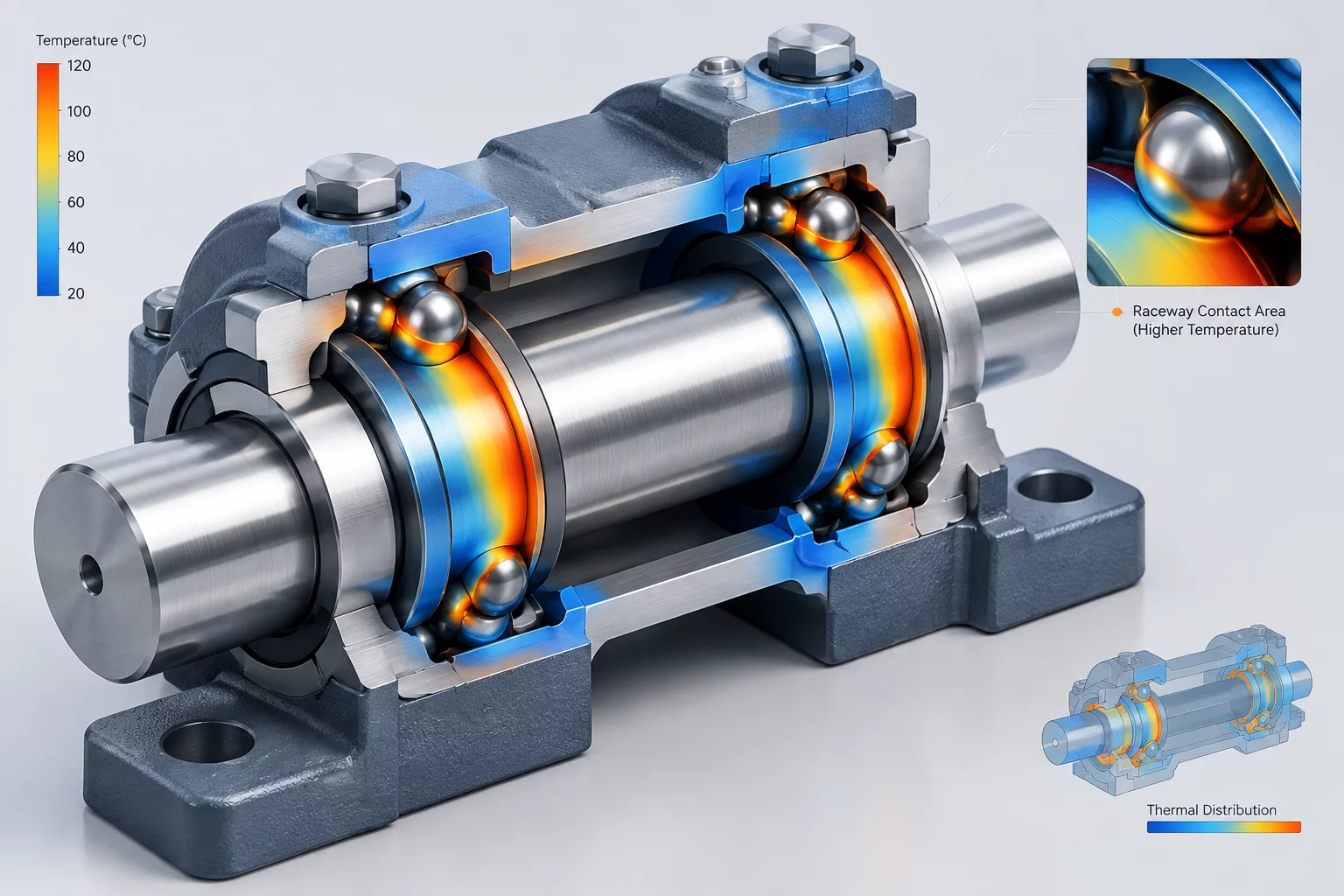
Precision mechanical assemblies depend heavily on tight operational tolerances. Thermal expansion introduces dimensional variations during continuous operation, changing calculated shaft fits and bearing clearances significantly. Heat generation stems primarily from frictional resistance within rolling element contact zones and viscous fluid shearing inside lubricant films. Temperature gradients establish themselves across inner rings, outer rings, and housing structures during prolonged machine runtimes.
Evaluating Dimensional Growth Across Shaft Interfaces
Shafts manufactured from carbon steel expand radially and axially under elevated thermal loads. Linear expansion calculations utilize the material coefficient of thermal expansion, the overall component length, and the magnitude of temperature change. Unconstrained axial growth pushes bearing inner rings against shoulders, creating unintended axial preload forces across angular contact ball bearings or tapered roller bearings.
Internal Radial Clearance Dynamics
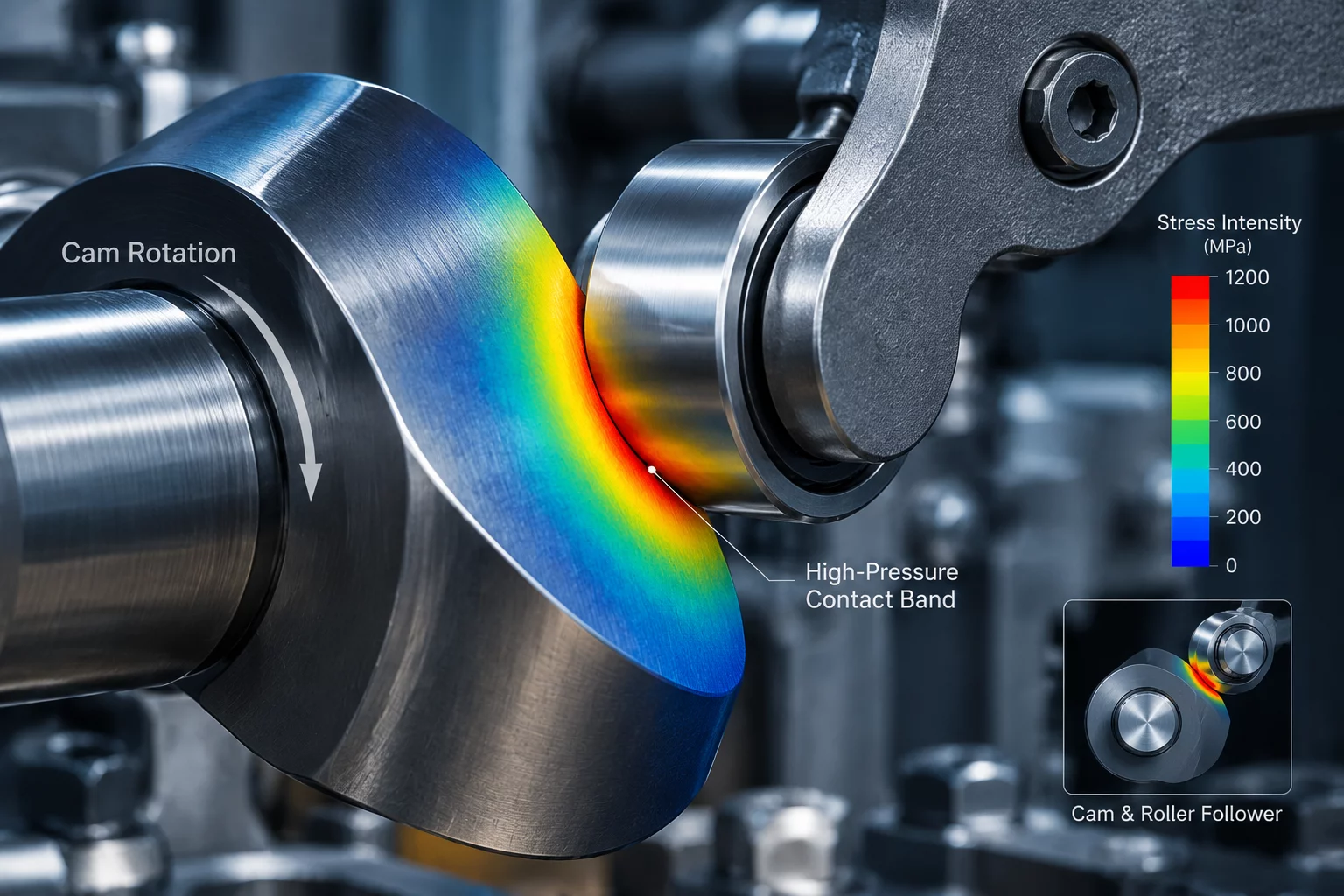
Internal radial clearance diminishes as shaft temperatures outstrip housing temperatures. Differential expansion pushes rolling elements against raceways with elevated force, elevating contact stresses above nominal design thresholds. Operating assemblies with diminished radial clearance increases frictional torque and accelerates surface fatigue mechanisms.
- Radial expansion differential: Shaft and inner ring expand faster than external stationary housings.
- Preload shift: Fixed-floating bearing arrangements require floating bearings to absorb axial length changes smoothly.
- Lubricant degradation: Elevated thermal states thin oil films, compromising elastohydrodynamic separation.
Mitigation Strategies and Design Adaptations
Engineers manage thermal growth by incorporating specific structural adaptations into precision assemblies. Choosing matched materials for shafting and housings stabilizes temperature differentials across adjacent interfaces. Incorporating wave springs or disc springs behind bearing outer rings maintains predictable preloads despite dimensional shifts.
blockquote>Proper bearing arrangement selection remains the primary defense against thermal binding in high-speed rotating machinery.
Engineers working with educational frameworks like AssemblyInterface Atlas evaluate clearance classes such as C3 or C4 when operating parameters predict high thermal gradients. Applying loose initial fit configurations prevents binding while maintaining axial running precision under steady-state operating conditions.
Leroy Reed
The explanation regarding thermal gradient differentials between shaft and housing cleared up a recurring vibration issue in our spindle designs.
Sage Hunt
Selecting a C3 radial clearance class usually resolves those exact spindle vibration spikes when thermal equilibrium is reached.
Tanner Cruz
How do you accurately model spring-loaded outer rings when thermal expansion changes spring deflection rates?