Lubrication Film Thickness in High-Speed Planetary Gearbox Assemblies
- 7019
- 2
Elastohydrodynamic Lubrication in Planetary Systems
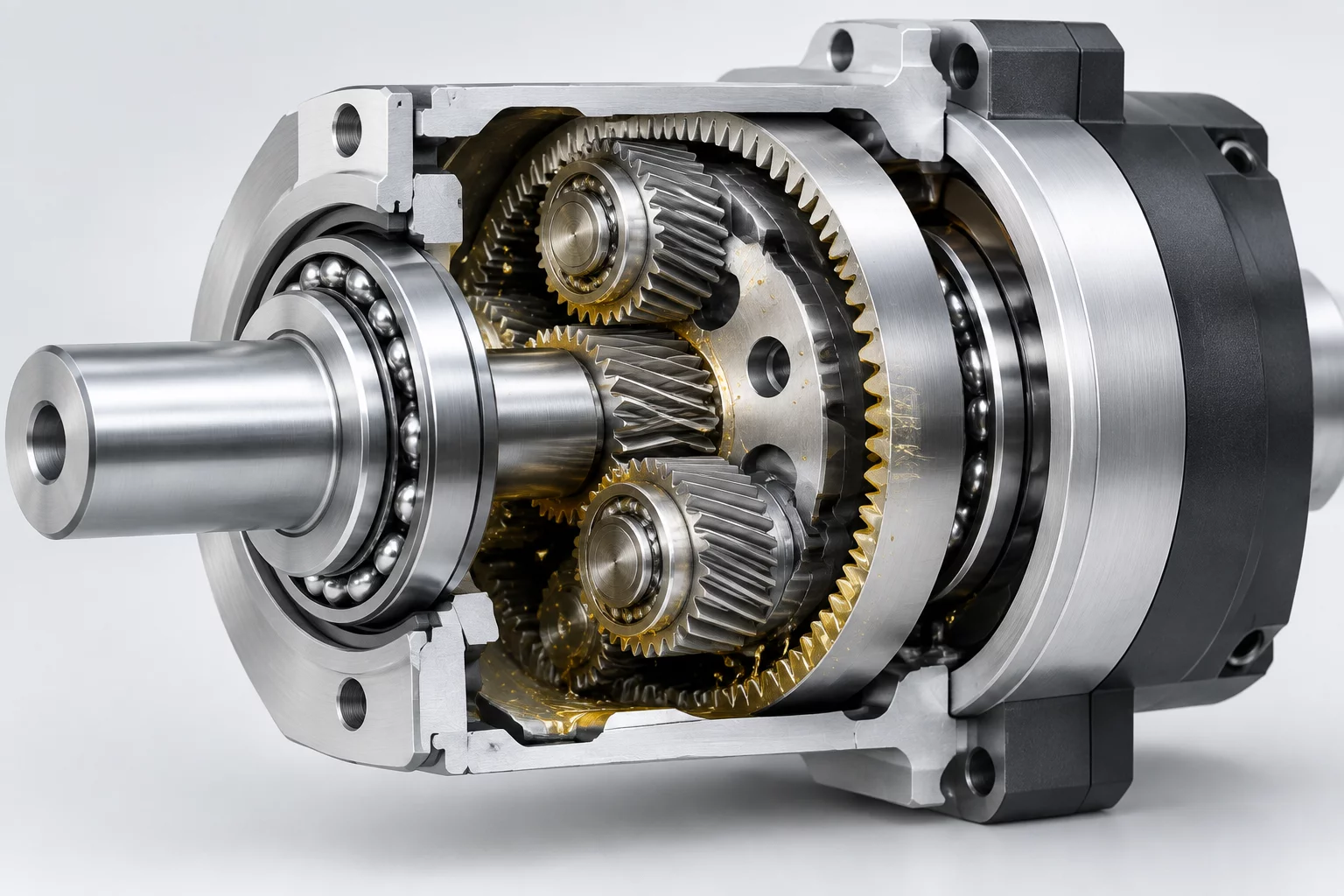
High-speed planetary gearboxes deliver high power density within compact enclosures. Multiple planet gears engage simultaneously with central sun gears and outer ring gears, creating complex elastohydrodynamic lubrication conditions. Maintaining an adequate fluid film separates metal surfaces completely, preventing scuffing and fatigue failure.
Film Thickness Calculation and Operating Factors
Elastohydrodynamic film thickness depends on lubricant viscosity, entrenchment velocity, operating temperature, and localized contact geometry. High rotational velocities generate strong hydrodynamic wedge forces, pushing fluid into gear mesh zones. High pitch-line speeds generate significant fluid shearing and heat, reducing effective lubricant viscosity right within the contact zone.
Centrifugal Force and Oil Starvation Risks
Planet carriers rotating at high velocities exert strong centrifugal forces on lubricant droplets. Oil throws outward toward ring gear internal teeth, potentially starving sun-to-planet contact lines. Starvation thins fluid films below critical micro-geometry roughness levels, causing intermittent metal contact.
- Viscosity index stability: Lubricants must resist thermal shear degradation at elevated temperatures.
- Entrainment speed effects: High speed boosts film formation but increases fluid friction heating.
- Centrifugal dispersion: Rotating carrier geometries alter lubricant distribution paths inside gearboxes.
Fluid Selection and Delivery Architecture
Engineers design targeted oil jet lubrication systems to supply pressurized oil directly into gear tooth mesh entry zones. Synthetic polyalphaolefin oils featuring high viscosity indices maintain stable film thickness across wide operational temperature ranges.
Supplying cool oil directly to the meshing zone counteracts thermal shear thinning, protecting high-speed planetary gearing.
Comprehensive educational modules on AssemblyInterface Atlas demonstrate how calculating minimum film thickness ratios helps engineers select optimal oil viscosity grades. Proper oil selection guarantees reliable surface separation without inducing excessive viscous drag losses.
Evelyn Stewart
The distinction between entrainment velocity gains and shear heating losses in high-speed planetaries is spot on.
Tina Walker
Directed oil jets positioned specifically at the mesh exit also help drag heat away before re-entry.