Analysis of Vibration Propagation Across Bolted Structural Flanges
- 7375
- 0
Dynamic Behavior of Bolted Structural Joint Interfaces
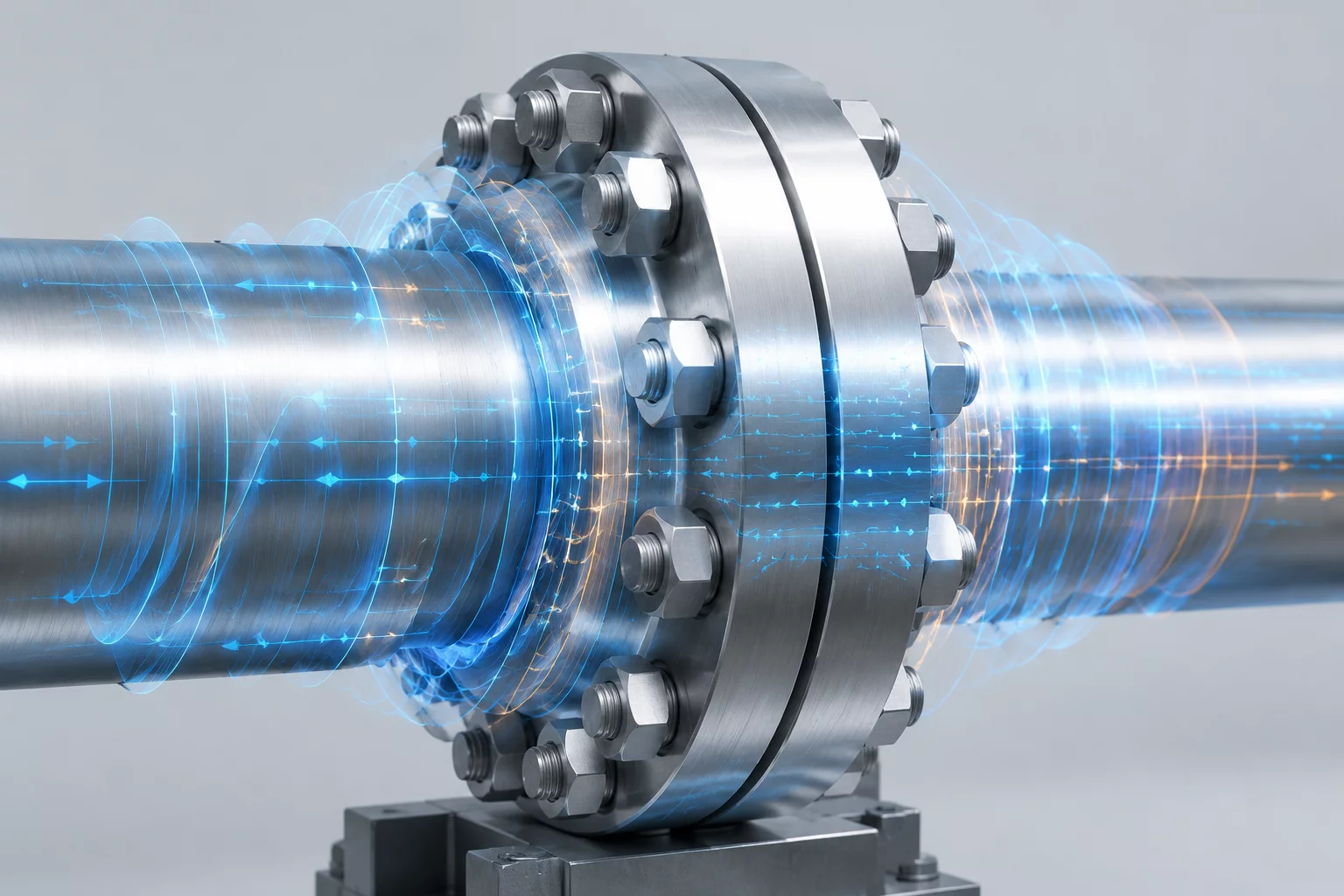
Bolted structural flanges join major mechanical sub-assemblies across aerospace, automotive, and industrial machinery frameworks. Dynamic excitation forces propagate through flange interfaces, altering vibration modes and inducing structural noise. Understanding interfacial stiffness and dynamic damping behavior enables accurate predictions of system dynamic responses.
Energy Transfer and Micro-Slip Phenomena
Vibration energy transfers across bolted joints through solid contact patches and fastener bodies. Dynamic shear forces cause microscopic slipping along un-bonded flange contact areas. Micro-slip provides friction damping that dissipates kinetic energy, but continuous fretting action degrades surface coatings and reduces long-term joint integrity.
Preload Decay and Joint Stiffness Fluctuation
Cyclic bending moments and axial forces reduce initial bolt preload over time. Thread embedment, gasket relaxation, and micro-yielding lower clamping force across flange faces. Lower clamping force decreases contact area, reducing dynamic joint stiffness and shifting natural frequencies closer to machine excitation speeds.
- Interfacial contact pressure: High preload creates uniform contact zones around bolt holes.
- Fretting corrosion: Microscopic slip under dynamic shear produces fine oxide debris inside joint interfaces.
- Natural frequency shifts: Reduced joint clamping stiffness lowers structural resonance frequencies.
Structural Design for Enhanced Attenuation
Engineers utilize optimized bolt pitch patterns, stiffened flange lips, and specialized damping interlayers to manage vibration transmission. Increasing bolt density homogenizes pressure distribution across contact faces, minimizing un-clamped gaps where flexural waves propagate unimpeded.
Maintaining stable bolt preload remains fundamental to preserving joint stiffness and preventing dynamic vibration amplification.
Analysis guidelines provided by AssemblyInterface Atlas recommend finite element modeling of joint contact non-linearities. Accurate interface modeling prevents unintended structural resonances and protects sensitive mounted components from high-frequency excitation.