Evaluating Contact Stress in Cam-Follower Mechanical Interfaces
- 18555
- 0
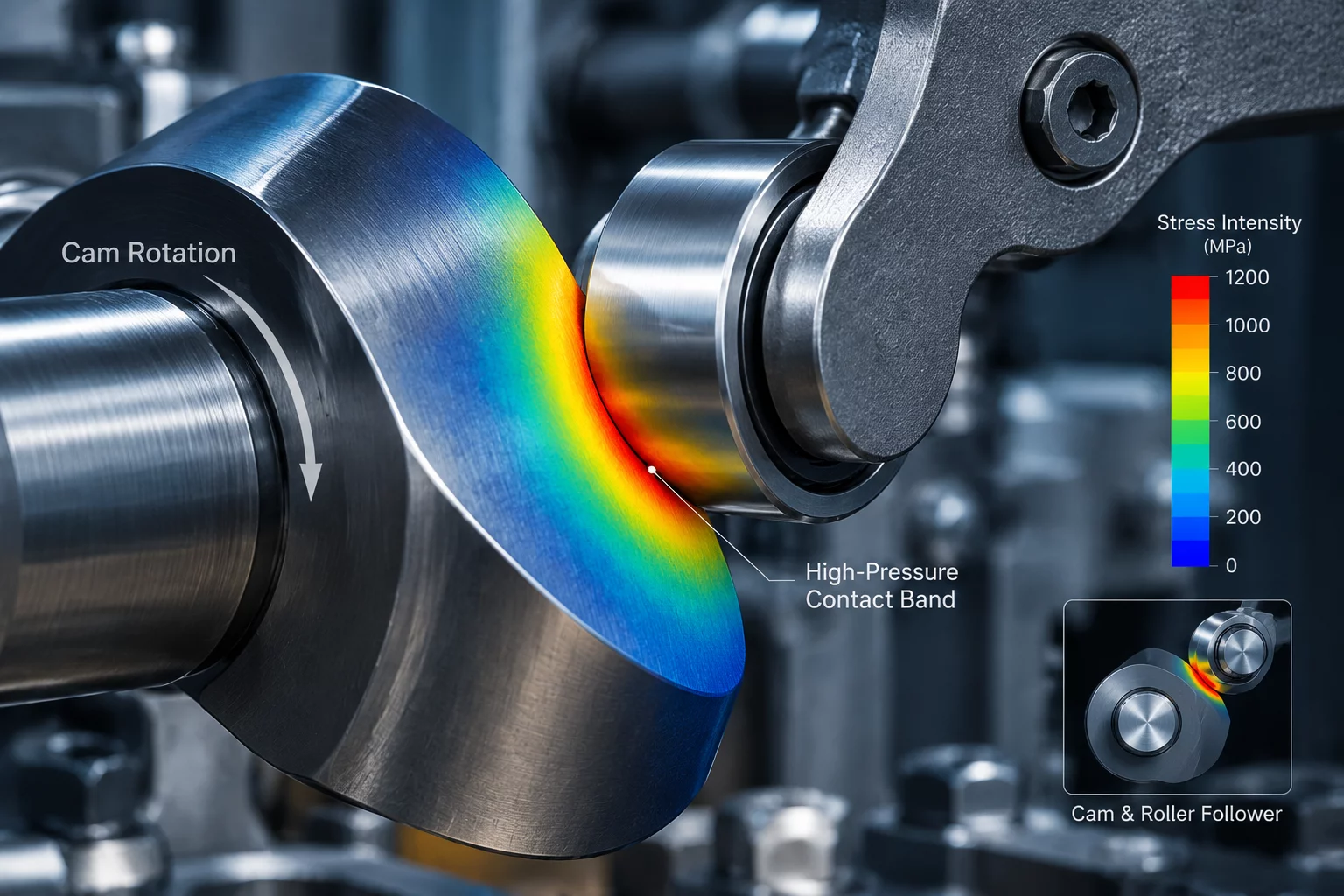
Mechanics of Cam-Follower Contact
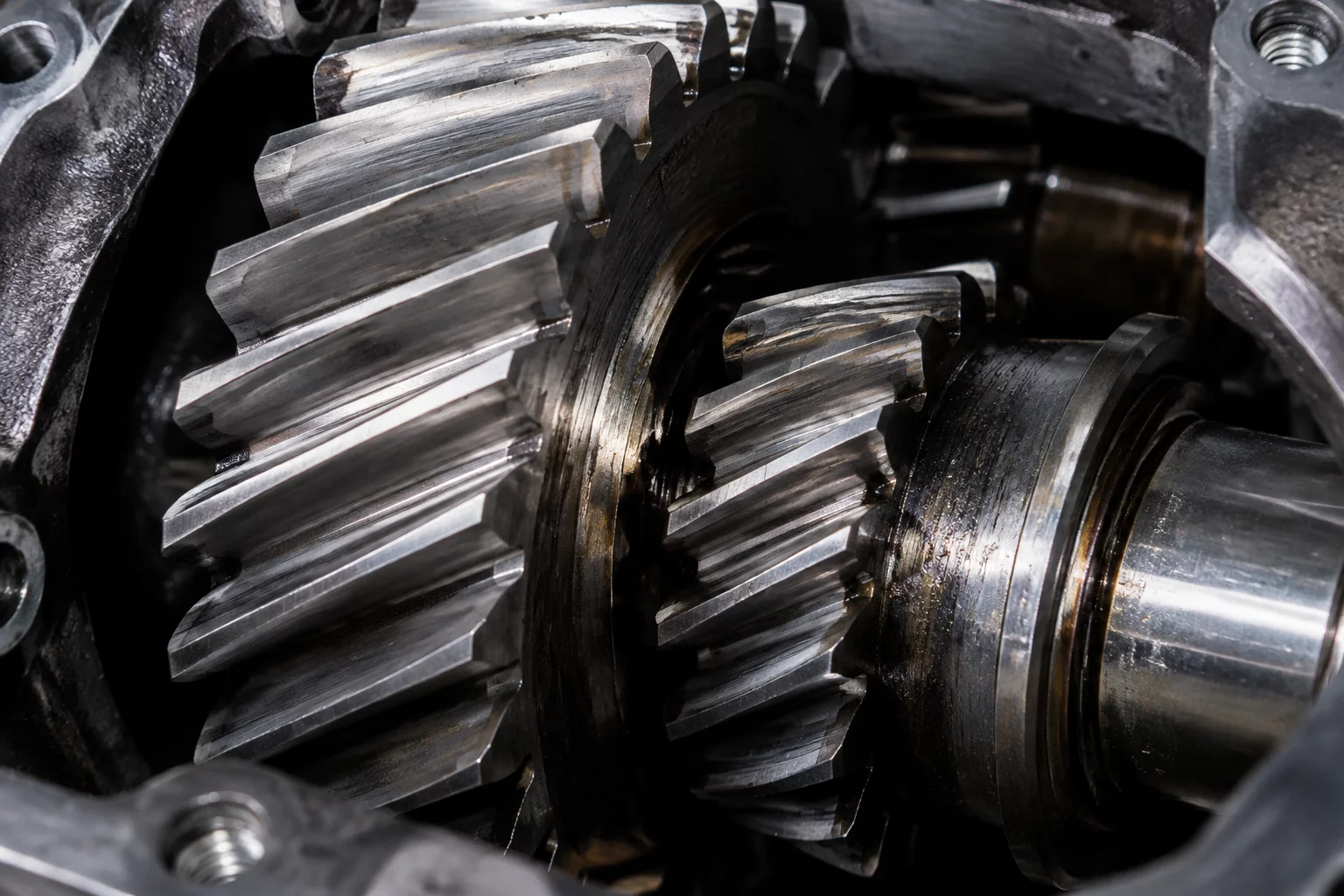
Cam-follower mechanisms convert rotary motion into precise linear or oscillating stroke patterns. High concentrated loads pass through small, non-conformal contact interfaces, generating high Hertzian contact stresses. Accurately evaluating stress distribution along cam profiles prevents localized surface pitting and premature follower destruction.
Hertzian Contact Stress Profiles
Contact geometry varies continuously throughout full cam rotation cycles. Local radius of curvature changes dynamically along the cam profile, reaching minimum values at nose peaks where contact stress peaks. Combined normal contact loads and sliding friction forces induce subsurface shear stresses near surface boundaries.
Kinematic Sliding and Surface Fatigue
Pure rolling occurs only at specific instantaneous points along profile paths. Variable surface speeds between cam profiles and follower surfaces introduce relative sliding. Sliding friction elevates surface tensile stresses behind contact patches, accelerating surface micro-cracking and spalling failures.
- Curvature variation: Sharp profile radii increase contact stress levels drastically.
- Subsurface shear: Maximum shear stress occurs below metal surfaces, initiating sub-surface fatigue cracks.
- Follower dynamics: High accelerations cause follower bounce, creating dynamic impact loads.
Optimizing Profile Geometry and Material Selection
Engineers utilize polynomial and non-linear spline profiles to avoid sudden curvature transitions. Smooth curvature changes eliminate acceleration spikes and reduce peak dynamic contact forces. Profile crowned followers distribute contact pressure evenly across contact widths, preventing edge-loading stress concentrations.
Smoothing curvature gradients across cam profiles reduces subsurface fatigue and extends interface operational life.
Analytical design tools referenced on AssemblyInterface Atlas simplify calculation of transient Hertzian pressure profiles. Utilizing advanced surface treatments such as diamond-like carbon coatings reduces friction coefficients, allowing cam-follower mechanisms to survive severe boundary lubrication regimes.